
Exercise & Rehab Programs
Restore Balance, Rebuild Core Strength, & Prevent Injury
At the leading exercise rehabilitation center in Mohania, physical wellness relies on active rehabilitation. At Prashant Physiotherapy Clinic in Mohania, Bihar, under the clinical leadership of Dr. Sanjay, our custom Exercise & Rehab Programs target muscular imbalances and correct posture problems.
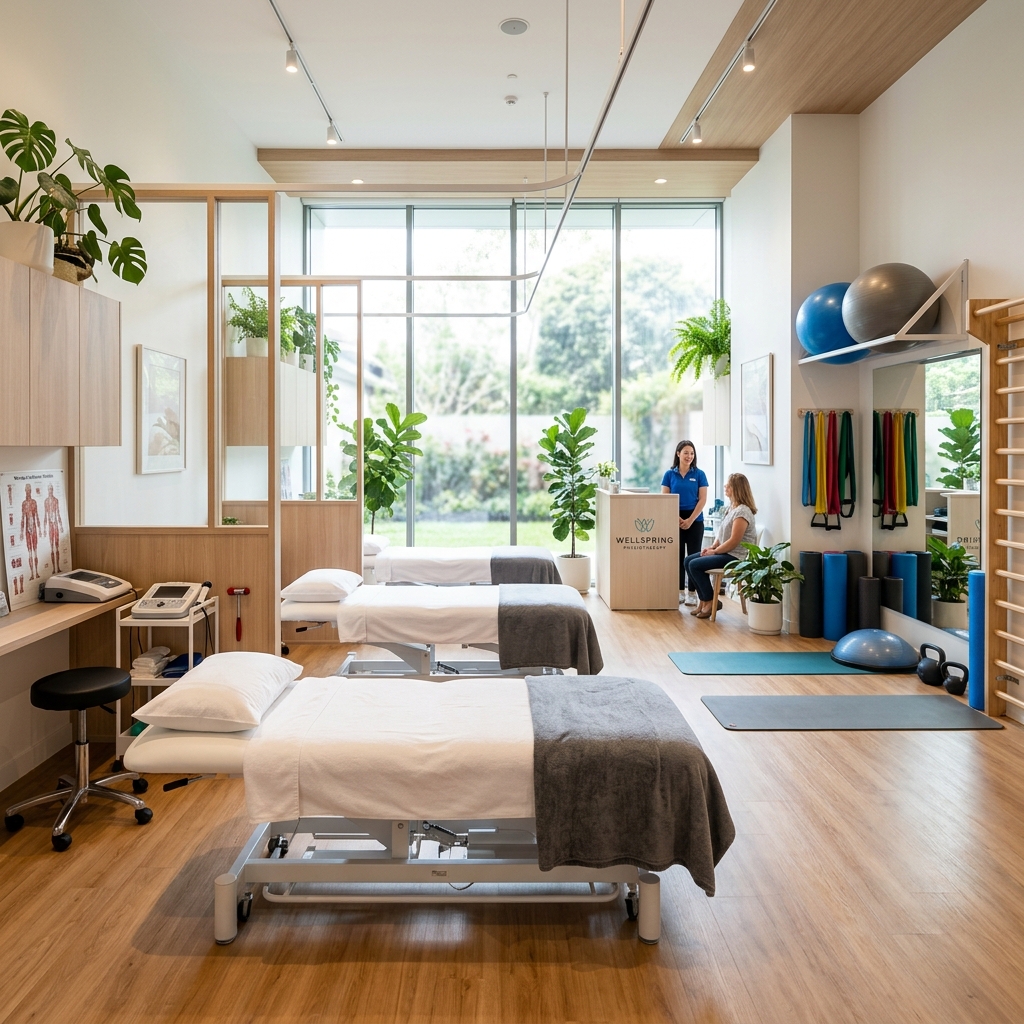
Clinical Foundations of Active Rehabilitation
Human movement relies on a complex synchronization of nerves, bones, and muscles. When a joint or tissue is injured, the brain immediately alters movement patterns to protect the area. This compensation causes certain muscles to become overactive and tight, while others become inhibited and weak. Over time, these imbalances alter joint mechanics, leading to chronic strain and re-injury. Active exercises reprogram the central nervous system to restore normal movement patterns and unload stressed structures.
1. Postural Alignment & Advanced Ergonomic Correction
Chronic sitting and poor ergonomics often lead to Upper Crossed Syndrome (characterized by a forward head posture, rounded shoulders, and tight chest muscles contrasting with weak mid-back stabilizers) and Lower Crossed Syndrome (manifesting as tight hip flexors and a hyper-arched lower back paired with underactive gluteal and abdominal muscles). For every inch the head projects forward from its neutral position, the effective load on the cervical spine increases by approximately 10 pounds. We design targeted routines to release hyperactive tissues and strengthen weak stabilizers, restoring your natural, pain-free posture.
2. Neuromuscular Core Activation & Segmental Stability
True core stability is the anticipatory activation of deep stabilizing muscles—including the Transversus Abdominis (TrA), lumbar multifidus, and pelvic floor. In healthy individuals, these muscles fire milliseconds before limb movement to stabilize the spine. In patients with chronic back pain, this firing sequence is delayed or absent. Our clinical protocols use specific breathing patterns, tactile cues, and progressive loading exercises to re-establish this protective muscular cylinder, shielding your spine from mechanical stress during daily activities.
3. Resolving Muscle Imbalances & Reciprocal Inhibition
Through the physiological principle of reciprocal inhibition, tight, overactive muscles automatically send inhibitory signals that prevent opposing muscles from contracting efficiently (e.g., tight hip flexors shutting down the gluteus maximus). We perform comprehensive movement screenings to identify these faulty relationships. Our treatment combines manual stretching to relax hyperactive muscles with targeted strengthening drills to reactivate weak, elongated muscle groups, restoring optimal joint tracking.
4. Senior Stability, Vestibular Integration & Fall Prevention
As we age, maintaining balance requires the integration of visual cues, inner ear vestibular systems, and joint proprioception. We evaluate stability metrics and design balance conditioning programs using wobble boards, foam pads, and dynamic single-leg stance drills. This stimulates joint mechanoreceptors, enhances reflex speeds, and trains the brain to process balance signals quickly, significantly reducing the risk of slips and falls at home.
5. Functional Coordination & Movement Pattern Integration
Isolated muscle strength is only useful if it coordinates seamlessly with daily life. The final phase of our rehab involves re-patterning fundamental movements like squatting, lifting, pulling, and rotating. By automating correct biomechanics in these patterns, we ensure that patients can lift groceries, climb stairs, and perform everyday physical tasks safely without overloading their joints.
Rehabilitation Programs We Offer:
- ✦ Core Activation & Back Strengthening
- ✦ Posture Correction for Scoliosis/Kyphosis
- ✦ Balance & Coordination (Fall Prevention)
- ✦ Senior Citizen Gentle Conditioning
- ✦ Shoulder & Scapular Stabilization
- ✦ Stretching & Myofascial Release Plans
Our Structured Fitness Protocols:
Dr. Sanjay supervises your training program step-by-step:
- Functional Assessment: Measuring baseline strength, dynamic balance, and joint flexibility.
- Isometric Exercises: Gentle muscle activation without joint movement, highly suited for painful joints.
- Isotonic & Resistive Training: Rebuilding power using therapeutic bands, light weights, and body resistance.
- Balance & Proprioception: Dynamic balance drills on balance cushions and single-leg cycles to improve ankle/knee stability.
- Home Exercise Log Book: Providing a customized booklet and videos to guide your independent exercises.
Frequently Asked Questions (FAQs)
"Due to my office desk routine, I developed chronic neck stiffness and bad posture. Dr. Sanjay's posture correction program and strengthening drills corrected my alignment completely. I feel energetic throughout the day!"
- Preeti Sharma, Mohania